Custom vs. Prebuilt keyboards - what is the actual difference?
Prebuilt, Barebone, or Custom? The real differences between a keyboard that is ready out of the box and one you assemble yourself - and which suits whom.
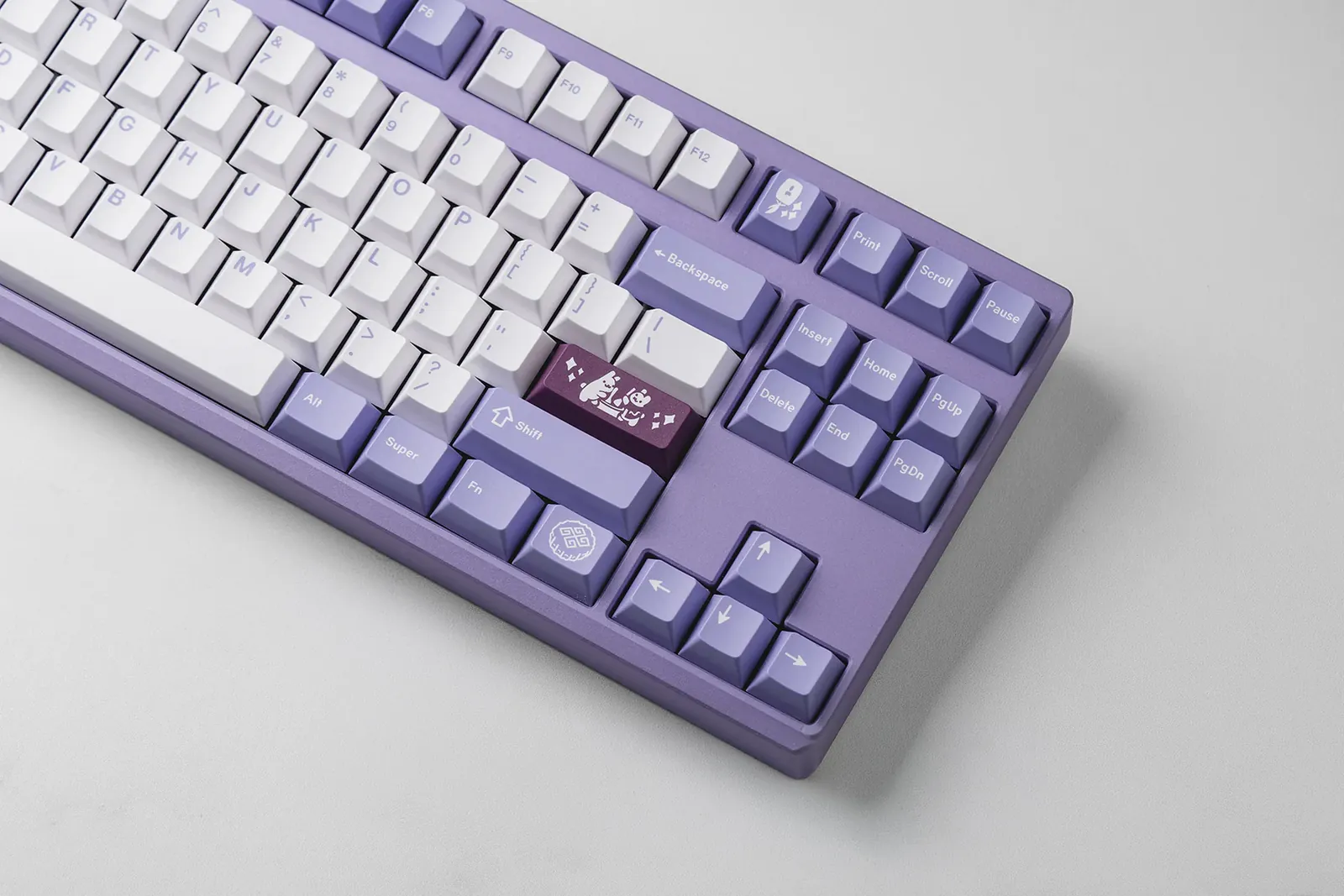
If you have started taking an interest in mechanical keyboards, you have probably come across the terms Prebuilt, Barebone, and Custom Keyboard pretty quickly. At first glance, the difference seems simple: one keyboard comes ready out of the box, and you assemble the other yourself.
But in practice, the difference is a little more interesting than that.
A custom keyboard lets you choose almost every component and tailor the keyboard to your personal preferences - from the switches and keycaps to the plate, internal construction, and typing feel. On the other hand, modern prebuilt keyboards have improved significantly, and some now come with factory features that used to be found almost exclusively in the custom world.
So what is the real difference, and which suits whom?
What is a prebuilt keyboard?
A prebuilt keyboard arrives ready to use. Take it out of the box, connect it to your computer - and start typing.
The manufacturer has already chosen the switches, keycaps, stabilizers, plate, and other internal components for us.
This does not necessarily mean you cannot modify it. Many prebuilt keyboards today come with a Hot-Swap PCB, which allows you to remove and replace switches without soldering. You can, of course, also replace the keycaps, and some models allow further modifications.
The main advantage is clear: you do not need to know how to build a keyboard to enjoy a good mechanical keyboard.
And what is a custom keyboard?
In the custom world, we have much more control over the final result.
In many cases, you buy a kit that includes the case, PCB, plate and other components, but choose the switches and keycaps separately. Some models let you choose between different plate types, PCBs or mounting options when you place your order.
And that's where the fun begins.
You can choose switches based on the weight and feel you like, match keycaps to your desired look and sound, choose a plate made from a material like PC, PP, FR4 or aluminum, and try different configurations of foam or other internal components.
The result is a keyboard that can be much more personal.
And what is Barebone?
The term Barebone falls somewhere in the middle.
It usually refers to a keyboard that comes with the case, PCB and plate, and sometimes stabilizers too, but without switches or keycaps.
You add the missing parts yourself.
This can be a great way to get into this world: you don't need to build everything from scratch, but you still get to choose two of the components that have a major impact on the typing experience.
Custom doesn't necessarily mean better
This may be the most important point.
It's easy to think that an expensive custom keyboard will automatically be better than a cheaper prebuilt keyboard. In practice, it doesn't always work that way.
A keyboard is a complete system with many components working together. Great switches don't guarantee you'll like the result, and neither an aluminum case nor a high price guarantees a feel that suits you.
Sometimes you unbox a prebuilt keyboard, type on it for the first time and immediately say: this is exactly what I was looking for.
On the other hand, a custom keyboard may take a few attempts before you find the right combination.
And that's part of the experience.
The big advantage of Custom: you can experiment
One of the fun things about the world of mechanical keyboards is discovering just how much a small change can affect a keyboard.
Change the switches - and the feel changes.
Change the keycaps - and suddenly both the sound and feel are different.
Switch to a plate made from a different material - and the keyboard can feel softer or stiffer.
Change the internal configuration - and you get yet another result.
That's why building a custom keyboard isn't necessarily a straightforward path where you pick "the best parts." In many cases, it's a process of experimenting, making changes and personalizing.
And that's exactly what makes the hobby so interesting.
And what's the advantage of Prebuilt?
Simplicity.
Not everyone wants to open up a keyboard, compare plate materials, choose stabilizers and weigh up dozens of switch types.
Sometimes you just want a good keyboard.
And today, there are prebuilt keyboards that come with hot-swap, a gasket mount, foam layers, wireless connectivity and even an aluminum case - features that used to be much more closely associated with the custom market.
So the distinction between the two worlds is much less clear-cut than it used to be.
So what's right for you?
If you want to take a keyboard out of the box and start using it, prebuilt is probably the simplest choice.
If you want to choose your own switches and keycaps without getting into a complicated build, barebone can be an excellent middle ground.
And if you enjoy experimenting, taking things apart, putting them together and discovering how each component affects the typing experience - the custom world opens up almost endless possibilities.
But there isn't one right answer here.
Ultimately, the best keyboard isn't the one labeled Custom or the one that cost the most - it's the one you enjoy typing on the most.
Gali | GaliKey