What makes a keyboard Creamy or Thocky
A guide to mechanical keyboard sound: switches, keycaps, plate, foams, construction, case and stabilizers - and what really makes a difference.
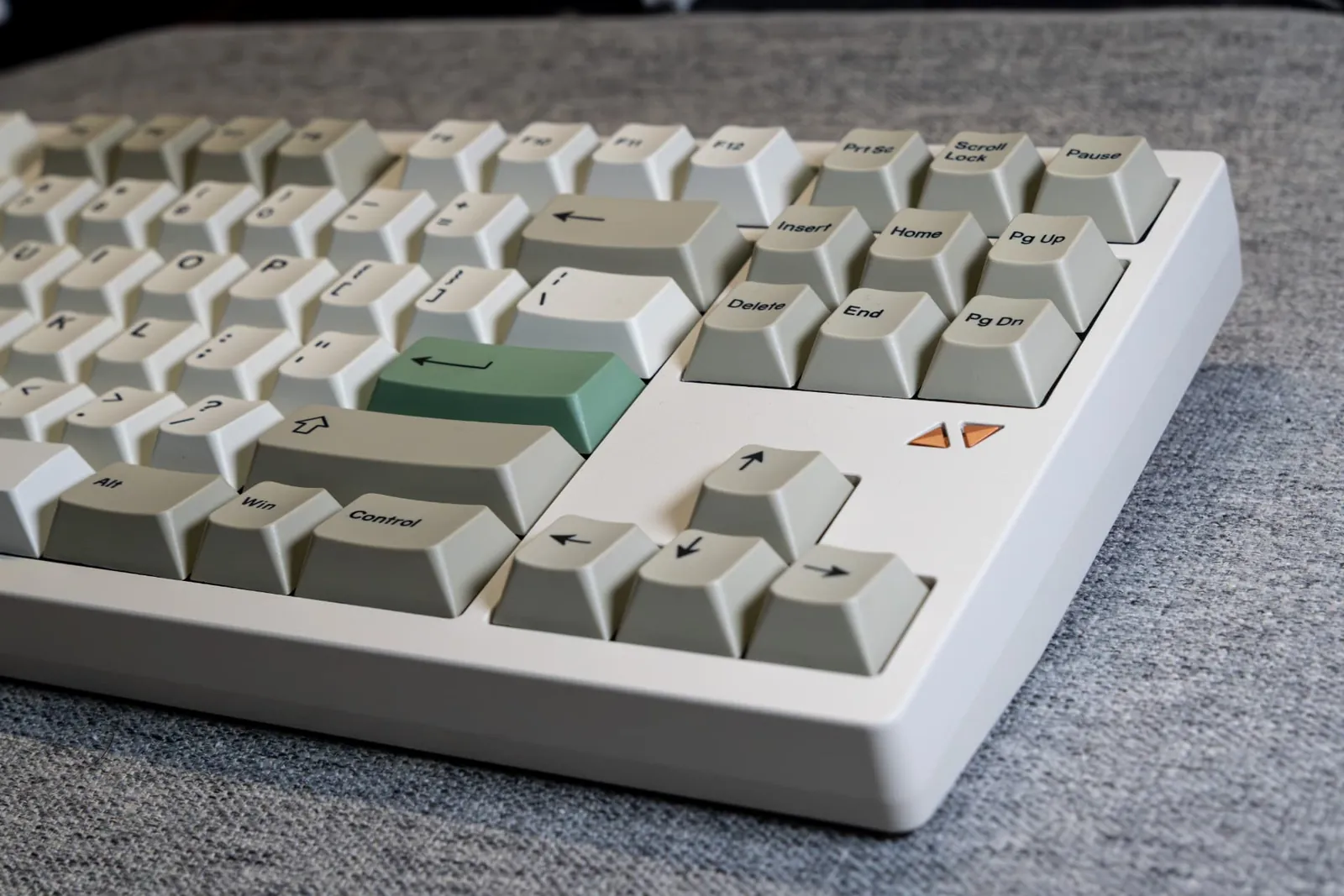
If you've spent a little time in the world of mechanical keyboards, you've probably already come across words like Creamy, Thocky, Clacky, Marbly and a whole host of creative attempts to describe… the sound of a keyboard. 😄
One of the first things you discover in this hobby is that the same keyboard can sound completely different depending on its switches, keycaps, plate and construction.
So what actually makes a keyboard sound deep, creamy and full?
And is buying a "Thocky switch" enough to get the sound we're looking for?
The short answer is: absolutely not.
Let's understand why.
First of all - what exactly are Creamy and Thocky?
There is no precise scientific definition for these terms. They are descriptions the community uses to try to explain the character of a sound.
Thocky usually describes a lower-pitched, deeper and fuller sound - that satisfying thock we hear in many sound tests.
Creamy is a little harder to define. To me, it's not just a deep sound, but also a smooth, soft and rounded feel and sound, without too much sharpness.
By contrast, Clacky usually describes a brighter, sharper and higher-pitched sound.
None of them is necessarily "better." Some people like a deep-sounding, relatively quiet keyboard, while others specifically look for that sharp, lively clack.
Personally, I tend to lean toward the Creamy/Thocky side, but that's exactly the beauty of this hobby - we can build a keyboard to suit our personal taste.
So what really determines the sound?
The most common mistake is to think:
"I want a Thocky keyboard, so I need to buy Thocky switches."
In practice, the switch is just one part of a complete system.
1. The switches
Let's start with the usual suspect anyway.
Different switches certainly have different characteristics. The materials used for the stem and housing, the switch's construction, stem length, spring and lubing can affect the sound and feel.
Some switches tend toward a lower-pitched, fuller sound, while others sound sharp and bright.
But here's the important part:
The same switch can sound great in one keyboard and completely different in another.
That's why a switch sound test on YouTube can give you a general idea, but it can't guarantee that's how it will sound in your setup.
2. Keycaps - much more significant than you might think
When I started experimenting more with swapping keyboard parts, I discovered just how much the keycap set itself can change the character of the sound.
The material, thickness and profile of the keycaps affect the sound produced with every keystroke.
Thick, substantial keycaps can often produce a fuller, deeper sound, while a different set on the same keyboard with the same switches can make it sound brighter.
And the difference is sometimes surprising.
I've even had a keycap change alter a keyboard's character more significantly than attempts to swap out individual switches.
So if your keyboard is almost giving you the sound you want, don't rush to take it apart. Sometimes it's worth trying a different keycap set first.
3. The plate
The plate is the piece that holds the switches, and the material it's made from can affect both the sound and the typing feel.
There are many materials available, including:
Aluminum, FR4, Polycarbonate (PC), Polypropylene (PP), POM and more.
In general, stiffer plates may produce a sharper, more direct feel and sound, while more flexible materials can contribute to a softer feel.
I especially like keyboards with a slightly soft, flexible feel, so for me, the plate matters not just for the sound but also for the keyboard's feel.
But here too, there is no formula that says, for example, "PC = Thock." The result depends on the rest of the keyboard's construction.
4. Foams - more isn't always better
Many keyboards today come with various layers of foam:
Plate foam, PCB foam, case foam and sometimes additional layers such as PET or IXPE.
Foam can reduce empty space and reverberation inside the case and help produce a more consistent, controlled sound.
But there's a small catch.
When you fill a keyboard with too much material, you sometimes get a dull, muffled sound instead of a deep, creamy one.
That's why I don't believe in the approach of "the more foam, the better."
Sometimes removing a particular layer or reducing the amount of material inside the case gives the keyboard more room to "breathe" and improves its sound.
5. Keyboard Construction - Mounting Style
The way the PCB and plate are attached to the case has a major effect on the feel, and sometimes on the sound too.
One popular mounting style today is Gasket Mount, where the keyboard assembly rests on gaskets rather than being rigidly screwed directly to the case.
The goal is usually a more isolated, flexible feel.
But just because a keyboard says "Gasket Mount" doesn't guarantee it will feel soft or sound creamy. Some gasket-mounted keyboards are very stiff, while others have significant flex.
The type and thickness of the gaskets, along with the case and plate construction, also affect the result.
6. The Case Itself
The material and construction of the keyboard's body also have an effect.
A heavy aluminum case can give a keyboard a very different character from a plastic case. But don't assume that aluminum always sounds better.
Some plastic keyboards have a wonderfully deep, creamy sound, while some expensive aluminum keyboards are designed for a sharper, clacky sound.
The space inside the case and the way it is built also affect resonance.
More expensive doesn't necessarily mean more thocky.
7. Stabilizers - Especially Spacebar and Enter
If the whole keyboard sounds wonderful but the Spacebar clangs with every press, it's hard to ignore. 😄
Stabilizers sit beneath longer keys such as Spacebar, Enter, Shift, and Backspace.
Good stabilizers that are properly installed and tuned can make the larger keys an integral part of the keyboard's sound.
On the other hand, a stabilizer with rattle or ticking can stand out even on a keyboard whose other keys sound excellent.
What About Tape Mod and Polyfill?
Now we're getting into the world of mods.
Tape Mod means adding one or more layers of tape to the back of the PCB. It can change the resonance and give the keyboard a different character, sometimes a fuller, more pronounced one.
Polyfill or another filling material inside the case can reduce empty space and reverberation.
Both can be useful - but I think it's best to treat them as tuning tools, not something you have to do to every keyboard.
If the keyboard already sounds good, there's no need to open it up and start adding things.
And sometimes a mod that improves one keyboard actually hurts the sound or feel of another.
Why Does the Keyboard on YouTube Sound So Much Better Than Mine?
This is a particularly important question.
Sound tests are a lot of fun, and I love them myself, but remember that recordings are also affected by things that have nothing to do with the keyboard itself:
The microphone, its distance from the keyboard, the room, the desk, the desk mat, audio processing, and even your playback volume.
So a sound test is a way to get an impression, not a guarantee.
If you bought the exact same switches you heard in a video and your keyboard doesn't sound identical - that doesn't mean anything is wrong.
So How Do I Make My Keyboard More Creamy or Thocky?
Rather than replacing everything at once, I recommend taking it step by step.
If your keyboard is already good and you're just missing a little depth, try different keycaps first.
Next, you can experiment with different switches.
If you still want to change its character, you can try another plate or play around with the foam layers your keyboard supports.
Only then would I start experimenting with additional mods.
The advantage of this approach is that you really learn what each change did. If you replace the switches, keycaps, plate, and foam and do a Tape Mod all at once - the result might be wonderful, but you won't know why. 😉
And What Have I Learned from All My Experiments?
One thing I've learned after quite a bit of disassembly, assembly, and swapping switches and keycaps is that there's no magic recipe for creamy.
Sometimes I'm sure a particular switch will be perfect for a keyboard, only to discover that a different switch suits it better.
Sometimes a small change to the foam changes everything.
And sometimes I replace only the keycaps and suddenly say:
That's it. That's the sound I was looking for. 😄
To me, that's a big part of the fun of mechanical keyboards.
We're not just buying a keyboard - we can experiment, tune it, and discover which combination gives us the feel and sound we love.
And most importantly, remember:
Creamy and thocky are not measures of quality.
If you love the sound and feel of your keyboard - you've found the right result, even if someone else would call it clacky, marbly, or whatever other word the community comes up with next week. 😄⌨️💜
Gali | GaliKey